
You grab a box of cereal at the store. It boasts “low fat,” but then you spot the sugar content. High numbers stare back. Food labels confuse everyone at first.
Daily Values (DVs) fix that mess. The FDA sets these as simple benchmarks. They show if a food’s nutrients fit your daily needs. Based on a 2,000-calorie diet for most adults, DVs help you pick smarter. For example, aim low on sodium, high on fiber.
This post breaks it down. You’ll learn what DVs mean, key ones to watch, how percent DVs (%DV) guide choices, and daily tips. Soon, labels become your ally for better eating.
What Daily Values Reveal About Your Food Choices
Daily Values are FDA reference amounts for nutrients. You eat or limit them each day. They help you judge if a food supports health goals. Think of DVs as traffic lights on labels: green for go, red for slow down.
The FDA bases DVs on a 2,000-calorie diet. This works for many adults. However, your needs differ. Age, activity level, and sex change calorie counts. Kids eat less; athletes need more. DVs stay general guides, not personal diets.
Key DVs split into two groups. Limit saturated fat, sodium, and added sugars. Get plenty of fiber, vitamin D, calcium, and iron. Here’s a quick view:
| Nutrient | Daily Value | Goal |
|---|---|---|
| Saturated fat | 20g | Less than |
| Sodium | 2,300mg | Less than |
| Added sugars | 50g | Less than |
| Dietary fiber | 28g | At least |
| Vitamin D | 20mcg | At least |
| Calcium | 1,300mg | At least |
| Iron | 18mg | At least |
This table comes from current FDA standards. It makes comparisons easy. Take two snacks: pretzels or trail mix. Pretzels pack 15% DV sodium per serving. Trail mix offers 10% DV fiber. Pick trail mix for balance.
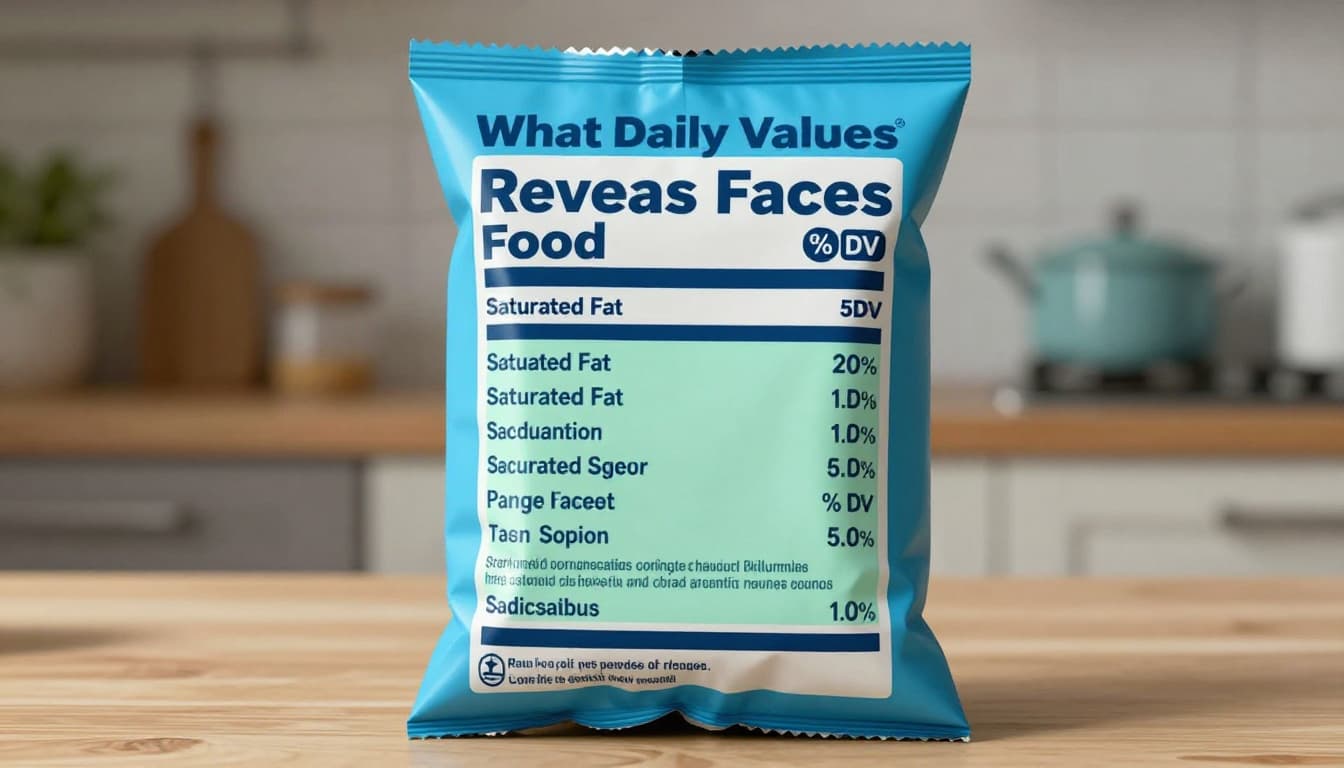
Labels use these DVs nationwide. Consistency lets you shop anywhere. In short, DVs reveal hidden pitfalls. A “healthy” bar might load added sugars. Check DVs first.
Why the FDA Uses a Standard 2,000-Calorie Diet
The FDA picks 2,000 calories as average adult intake. Most women need around 1,800 to 2,200; men 2,200 to 2,800. This middle ground fits labels for everyone.
Standards ensure fair play. Brands can’t tweak numbers. You compare apples to apples. Active folks adjust up; sedentary down. Doctors tailor plans.
For example, fiber DV sits at 28g. That’s solid for gut health. But runners might aim 35g. DVs start the conversation.
Decoding Percent Daily Values to Make Smarter Picks
Percent Daily Value (%DV) shows contribution per serving. Divide nutrient amount by DV, then multiply by 100. A yogurt with 260mg calcium out of 1,300mg DV equals 20% DV.
Rules keep it simple. 5% DV or less means low. 20% or more counts high. Two servings? Double it. Chips at 25% sodium become 50% in a bag.
Units matter: grams for fats, milligrams for sodium, micrograms for vitamins. Spot high calcium yogurt: 30% DV boosts bones. Chips at 30% sodium? Skip for heart health.
For more on %DV basics, see the FDA’s guide to lows and highs on labels.

Build balanced meals. Pair low-sugar cereal (5% DV sugars) with high-fiber fruit (15% DV). Total stays under limits.
Quick Rules for Spotting Low vs High Nutrients
Aim low on limits: saturated fat, sodium, sugars. Under 5% DV shines. Over 20% signals caution.
Boost goods: fiber, vitamins, minerals. 20% plus impresses. 5% or less disappoints.
Chips hit 30% sodium: high, so portion it. Almonds give 15% fiber: solid choice. Mix them.
Don’t chase one food. A super vitamin pill skips balance.
Real-Life Math: Adding Up Your Daily Intake
Track across meals. Breakfast cereal: 10% DV fiber. Lunch salad: 30% vitamin D. Snack fruit: 15% fiber. Dinner chicken: 20% iron. Total nears 100% without excess.
Use apps or notes. Adjust as needed.
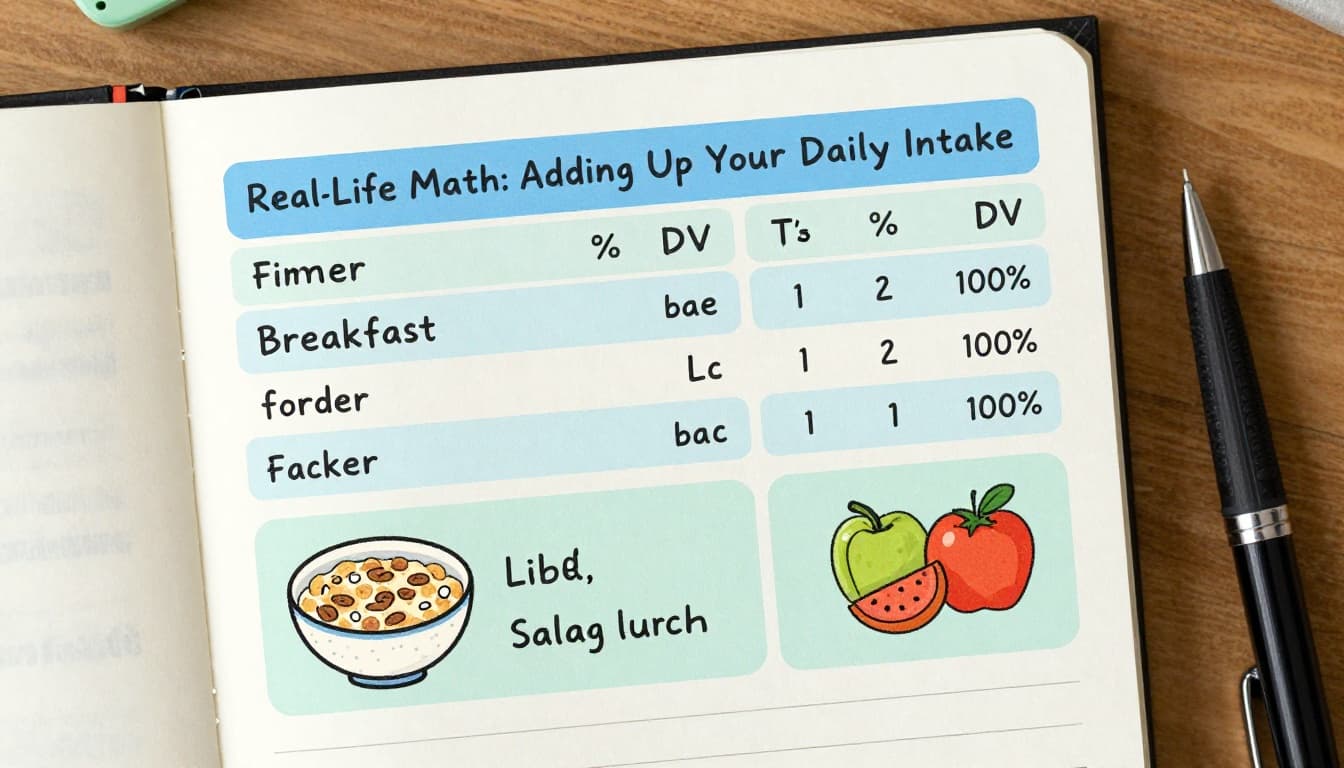
Breakfast hits 10%. Add lunch 25%. Snacks push to 70%. Dinner seals 100%. Sodium stays under 80%. Simple math guides you.
Updates to Daily Values and Who They Help Most
FDA updated labels in 2020. Added sugars got a DV: 50g. Fiber rose to 28g; vitamin D to 20mcg. Calcium hit 1,300mg; iron 18mg. No changes since, as of March 2026.
Check the FDA page on added sugars for details.
These help average adults. General nutrition advice fits most. Pregnant women, kids, or athletes see doctors. Personal diets beat generics.
Labels now list potassium too. Simpler footnotes explain %DV. Everyone benefits from clarity.
Practical Ways to Use Daily Values Every Day
Compare at the store. Two granolas: one 25% DV fiber, low sugar; other 5% fiber, high sodium. Grab the first.
Balance plates. Veggies for fiber; dairy for calcium. Keep fats low.
Shop smart. Stock high-DV staples: oats, yogurt, nuts. Skip high-sodium cans.
Plan meals weekly. Breakfast oats (20% fiber), lunch tuna salad (25% protein), dinner veggies (30% vitamins). Totals align.
Don’t obsess. Whole foods trump labels. Pair DVs with variety.
For label reading tips, try this guide to percent daily values.
Start small. Scan one label daily. Health improves fast.
Daily Values demystify labels. Based on 2,000 calories, they guide with %DV rules: 5% low, 20% high. Use them to limit bads, boost goods.
Check your next snack. Tweak habits now. Share your label find in comments. What’s your top tip?